In this guide
The short answer
Client onboarding is the handoff from an agreed engagement to a ready-to-start project. Confirm the scope, decision-maker, billing contact, required assets, responsibilities, review process, and first milestone before delivery begins.
A client says yes. Your team is ready to start. The next job is to turn that agreement into a project people can deliver without guessing.
This checklist is for service agencies onboarding a new client or a new engagement with an existing client. Adapt it to your service and the agreement you have made. The examples below are illustrative, not a prescribed timeline.
What should agency client onboarding achieve?
By the end of onboarding, the client and the delivery team should agree on what is being delivered, who makes decisions, what is needed to start, and what happens next. A welcome message is part of the experience, but it does not replace those working decisions.
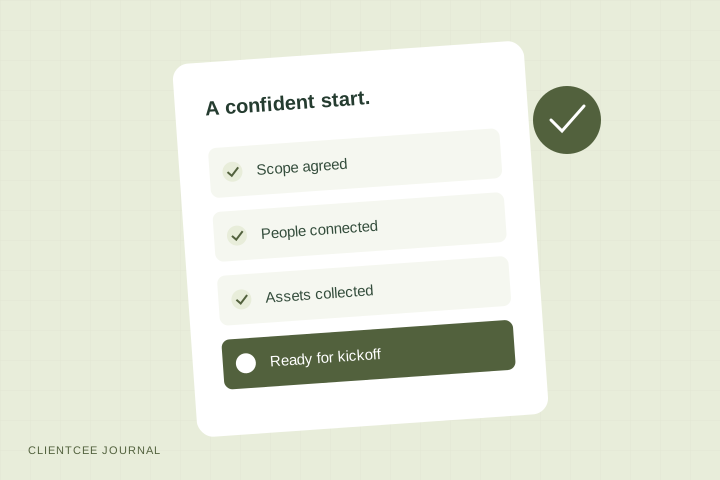
For a website engagement, “ready to start” might mean the scope is agreed, the main contact is confirmed, brand assets are received, and the first review is scheduled. Define your own starting conditions before you build a template.
The eight-step client onboarding checklist
1. Confirm the agreement and scope
Keep the approved proposal, estimate, or agreement accessible to the people who need it. Summarise the deliverables, exclusions, milestones, and agreed review rounds in plain language. Resolve any mismatch between a sales conversation and the written scope before work begins.
Done when: the delivery owner can explain what is included and where to find the agreement.
2. Identify the decision-maker and key contacts
Record the main client contact, the person who approves work, the billing contact, and your agency's delivery owner. One person may hold several roles. Ask how feedback will be consolidated if several stakeholders are involved.
Done when: everyone knows who can approve a deliverable and who answers billing questions.
3. Collect the information needed for the first milestone
Request only what the next stage requires. A branding project may need existing guidelines and research. A website project may need approved copy and a list of pages. Name each item, its owner, its due date, and what depends on it.
Avoid asking clients to send passwords in an ordinary form or message. Use the access-sharing method your organisation has approved and request the minimum access needed.
Done when: the first milestone has its required inputs or a visible plan for missing items.
4. Create the project and assign ownership
Turn the agreed deliverables into milestones and tasks. Assign an internal owner to each next action. Check that deadlines reflect dependencies rather than copying an old project's dates.
Done when: a teammate can open the project and identify their first task, its due date, and any blocker.
5. Agree how updates and reviews will work
Choose where routine updates, files, and review decisions belong. Explain when the client should expect an update, how to request a change, and who needs to respond. If you use a client portal, show the client the specific action they will take first.
Done when: the client knows where to check progress and how to return a decision.
6. Confirm the billing arrangement
Check the billing contact, invoice details, currency, payment schedule, and any agreed deposit or milestone arrangement. Use the actual agreement as the source. Make the person responsible for billing aware of the event that starts their next action.
Done when: finance knows what to prepare and what event makes it ready for review.
7. Hold a focused kickoff
Use the kickoff to resolve open questions. Review the goal, scope, contacts, first milestone, missing inputs, and next review. Finish by reading back the actions with their owners and dates.
Done when: the client and agency leave with the same next steps, captured where both can find the relevant information.
8. Send the first progress update
After work starts, send an update that follows the format you agreed. State what has moved forward, what happens next, and whether the client needs to act. This makes the communication promise tangible early in the relationship.
Done when: the client can distinguish an update they can simply read from a request that needs their response.
A compact onboarding handoff template
Copy these fields into your project notes or onboarding template. Remove any field that does not help your process.
| Field | Example for an illustrative website project |
|---|---|
| Engagement goal | Launch a clearer services website |
| Scope reference | Approved website proposal, version 2 |
| Agency owner | Assigned project manager |
| Client approver | Named marketing lead |
| First milestone | Review the proposed page structure |
| Required inputs | Brand files, existing page list, approved service descriptions |
| Review arrangement | One consolidated response from the client approver |
| Billing trigger | The milestone specified in the agreement |
| Open question | Confirm who provides photography |
| Next action | Client sends the brand files by the agreed date |
The value is in keeping the fields current. A completed checklist from a previous project is not evidence that the new engagement is ready.
How to handle missing information
Separate information needed now from information needed later. If photography is required only for a later stage, your team may be able to begin planning while it is collected. If approved positioning is necessary for the first task, record it as a blocker.
Tell the client what depends on the missing item and discuss any effect on the schedule. Update the project plan after you agree a change. Avoid quietly continuing with an assumption that will be expensive to undo.
How ClientCee can support the process
Use client management for relationship context, projects and tasks for delivery ownership, and the client portal for the information and actions you share. Estimates, contracts, and invoices support the commercial side of the engagement.
Choose the relevant modules and permissions for your workspace. This checklist describes a process your team runs; it does not imply every step is automatically created or sent by ClientCee. Our portal guide explains what to share, and the project-to-invoice guide covers later handoffs.
Questions about agency onboarding
How long should onboarding take?
Set the length around the inputs and decisions needed for the first milestone. A small repeat engagement may require a brief handoff. A larger engagement with several decision-makers may need more coordination. Track the remaining blockers rather than using one fixed duration for every client.
Who should own onboarding?
Give one person responsibility for coordinating the handoff. Sales, delivery, and finance can own individual actions, but someone should know whether the engagement is ready to begin.
What should a welcome email include?
Include the main contact, the first milestone, the client's next action, where updates will appear, and how to ask a question. Link to the relevant workspace instead of burying the instructions in a long attachment.
Put the checklist to work
Use these eight steps on your next engagement. At kickoff, ask the delivery owner and client approver to explain the next milestone in their own words. Any difference is a useful question to resolve before delivery moves further.
Published by ClientCee. See how these guides are prepared.